Introduction
For centuries, gold and silver have both played a role in wealth preservation.
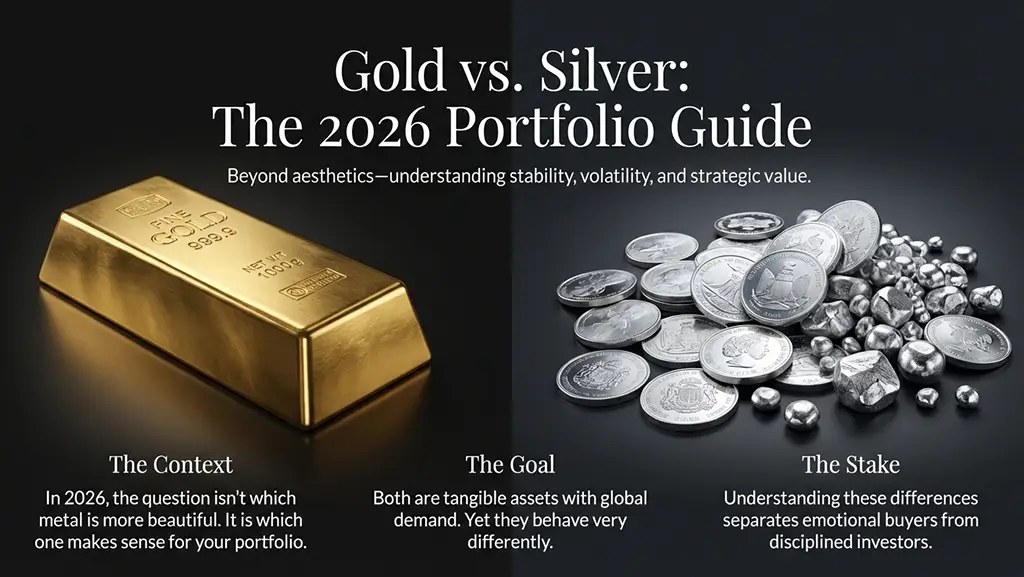
But in 2026, the question isn’t which metal is more beautiful.
It’s which one makes more sense for your portfolio.
Both metals hedge against inflation.
Both are tangible assets.
Both have global demand.
Yet they behave very differently.
Understanding those differences is what separates emotional buyers from disciplined investors.
Gold Bars
Explore our collection of certified 999.9 gold bars from trusted UAE and international refineries.
Gold bullion remains one of the most reliable assets for long-term wealth preservation and investment in Dubai.
Silver Bars
Discover investment-grade 999.9 fine silver bars available in various sizes.
Silver bullion offers an accessible way to diversify your precious metals portfolio.
The Core Difference: Stability vs Volatility
Gold is known for stability.
It moves steadily. It reacts to macroeconomic shifts, interest rates, inflation expectations, and geopolitical risk — but usually in a measured way.
Silver, on the other hand, is more volatile.
Why?
Because silver has a dual identity:
- It is a precious metal.
- It is also an industrial metal.
That means silver’s price reacts not only to monetary policy, but also to industrial demand (electronics, solar panels, manufacturing).
This can create sharper price swings — both upward and downward.

Price Accessibility: Entry Barrier Matters
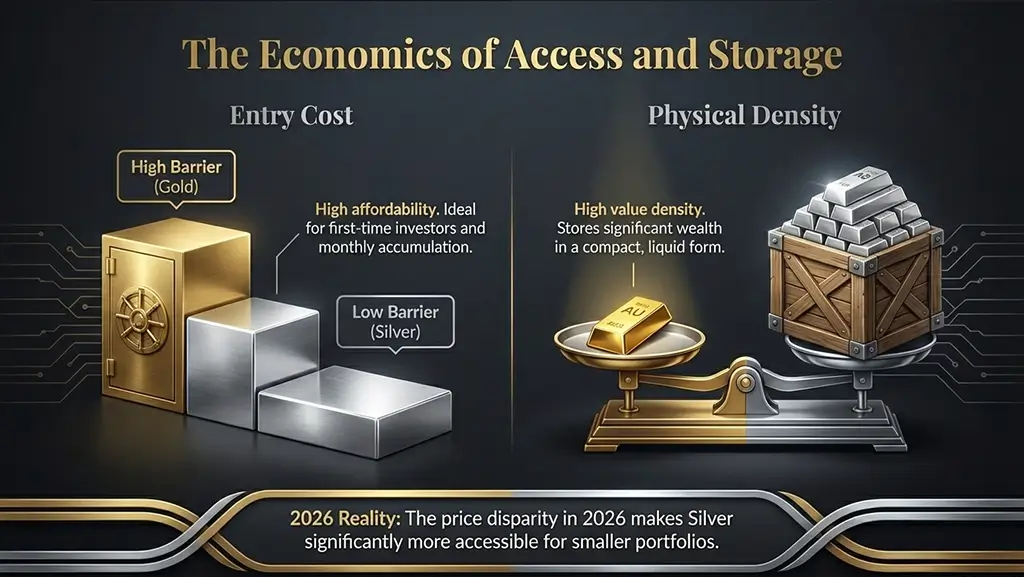
One of silver’s biggest advantages is affordability.
In 2026, the price of 1 oz gold is dramatically higher than 1 oz silver. This makes silver attractive for:
- First-time investors
- Smaller monthly accumulation strategies
- Younger buyers entering the precious metals market
Gold, however, concentrates more value in a smaller space.
A single 1 oz gold bar stores significant wealth in a compact, highly liquid form — something many investors prioritize for long-term storage.
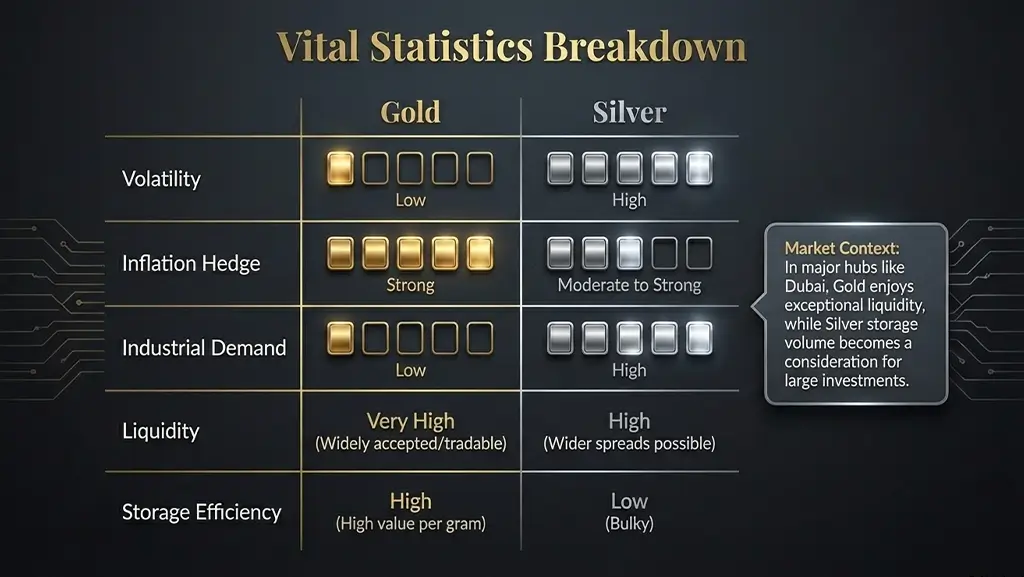
Gold vs Silver: Side-by-Side Comparison
Place this section mid-article:
| Factor | Gold | Silver |
|---|---|---|
| Volatility | Lower | Higher |
| Inflation Hedge | Strong | Moderate to Strong |
| Industrial Demand | Low | High |
| Storage Efficiency | High (High value per gram) | Lower (Bulky for same value) |
| Liquidity | Very High | High |
Inflation Protection in 2026
Gold has historically acted as a monetary hedge.
When central banks increase liquidity or global uncertainty rises, gold often benefits.
Silver can also perform well during inflationary periods — but its industrial exposure means it may underperform during economic slowdowns.
This makes gold the more defensive asset, while silver behaves more like a hybrid between precious metal and commodity.
Liquidity and Resale
In major trading hubs such as Dubai, gold bullion enjoys exceptionally strong liquidity.
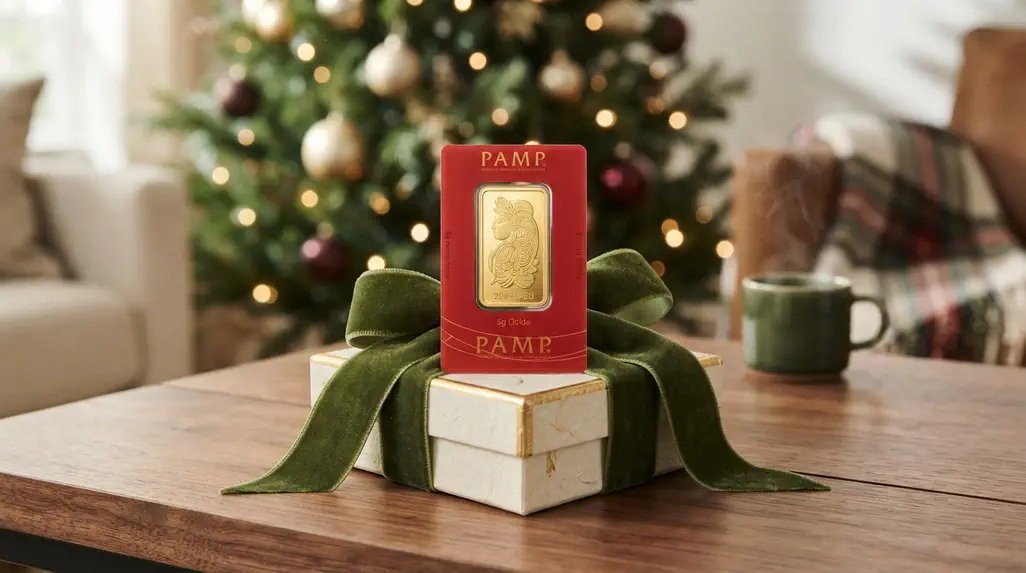
Recognized brands like PAMP Suisse or locally refined 999.9 bars are widely accepted and easily tradable.
Silver is also liquid — but spreads can sometimes be wider, and storage volume becomes a consideration for large investments.
So Which One Is Better in 2026?
The honest answer: it depends on your strategy.
If your goal is:
- Wealth preservation
- Lower volatility
- Long-term stability
- Compact high-value storage
Gold remains the core asset.
If your goal is:
- Higher potential upside
- Industrial demand exposure
- Lower entry cost
Silver may offer opportunity.
Many experienced investors choose a combination — using gold as the foundation and silver as the growth complement.
Final Perspective
Precious metals are not about trends.
They are about discipline.
Gold tends to reward patience.
Silver tends to reward timing.
Understanding your risk tolerance is more important than chasing short-term movements.