

PAMP 1kg Silver Bar 999 Cast (Suisse)
Product price:
5,902.47 AED
About PAMP 1KG Silver Bar 999 (Suisse 1000 Gram Cast)
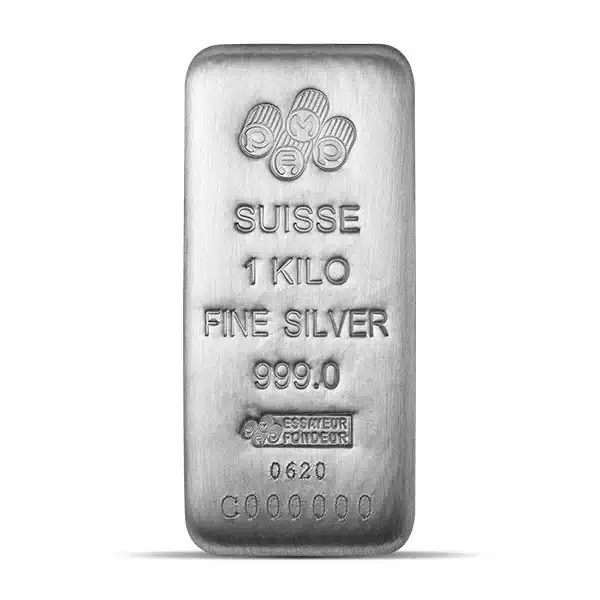
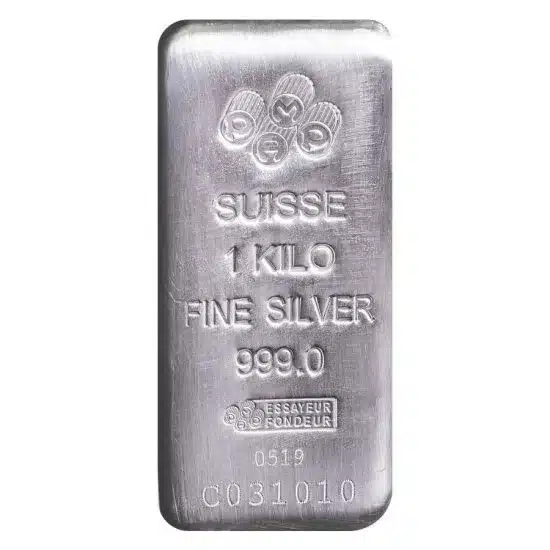
One kilogram of 999 fine silver, poured by PAMP in Switzerland — 32.151 troy ounces in a single cast bar, stamped with its weight, its fineness, the Essayeur Fondeur assayer’s mark and a unique six-digit serial cut into the face. This is the format people move to once they have stopped buying silver by the ounce. In stock at our counter in the Dubai Gold Souk, with insured delivery across the UAE.
What arrives: the full specification
| Metal | Fine silver |
|---|---|
| Fineness | 999 (99.9%) |
| Weight | 1,000 g — 32.151 troy ounces |
| Dimensions | 116 × 53 × 17.5 mm |
| Production method | Cast — poured into a mould, not struck from a blank |
| Finish | Matte, with surface variation from bar to bar |
| Refiner | PAMP SA, Castel San Pietro, Ticino, Switzerland |
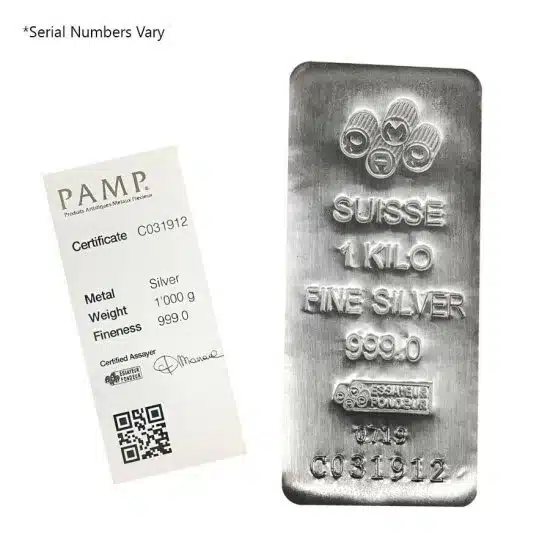
| Marks | PAMP logo, weight, fineness, Essayeur Fondeur |
| Serial number | Unique six-digit number engraved into the face of the bar |
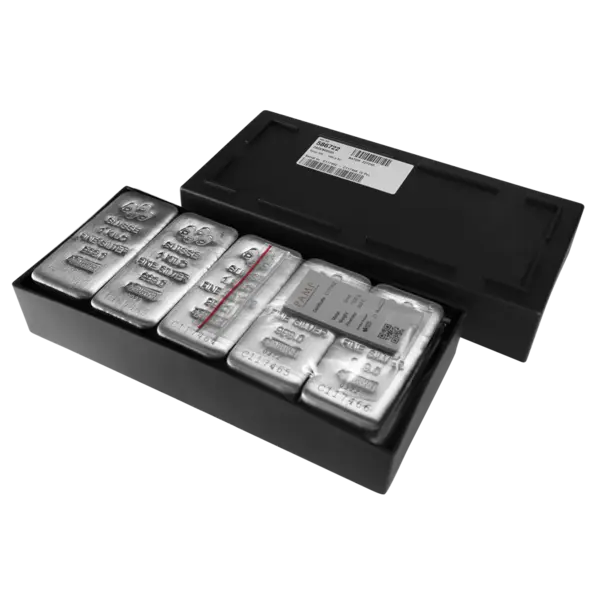
| Packaging | Varies by batch — see below. Ask us before you order |
| UAE VAT | Zero-rated as an investment precious metal |
Poured, not pressed — and why that changes the bar in your hand
Almost every silver bar under about 100 grams is minted: a blank is cut from a rolled strip and struck under enormous pressure, which gives it sharp edges, flat faces and a bright, even surface. Most kilogram bars, including this one, are cast: molten silver is poured into a mould and allowed to cool.
That single difference explains nearly everything about a kilo bar.
| Cast — this bar | Minted — a 1 oz bar | |
|---|---|---|
| How it is made | Molten silver poured into a mould | Blank struck under pressure |
| Surface | Matte, uneven, with cooling marks | Bright, flat, uniform |
| Edges | Rounded, slightly irregular | Sharp and square |
| Markings | Cast or stamped into the metal | Struck crisply in the same press action |
| Two bars side by side | Visibly different from each other | Effectively identical |
| Cost to produce | Lower — fewer steps, less tooling | Higher per gram of metal |
| Usual packaging | Often loose, or in a simple sleeve | Sealed assay card |
None of that is a defect. Casting is the standard method for large bullion bars, and it is a large part of why the metal costs less per gram at this size.
Why no two of these bars are identical
This is the single most common surprise on a first kilo purchase, and it is worth saying plainly before you order rather than after it arrives.
When molten silver cools it contracts, and it does not contract evenly. The result is a surface with ripples, small depressions, faint flow lines and sometimes a slightly dished top — what the trade calls shrinkage. Dimensions vary a little from bar to bar for the same reason, which is why published figures for this bar are nominal rather than exact. Retailers who sell it say the same thing in their own words: the cast finish varies from bar to bar.
What matters is that the weight does not vary. It is a kilogram of 999 silver whether the top is glassy or pitted. If you want a bar that looks machine-made, you want a minted bar and you will pay more per gram for the privilege — that is a legitimate preference, just a different product.
One related point we cover elsewhere rather than here: silver, unlike gold, reacts with sulphur in the air and can tone over time. A cast bar has more surface area and usually no sealed card, so it tends to show this sooner. It changes neither weight nor purity. The chemistry and the storage advice are on our 1 oz PAMP silver bar page.
Checking a kilo bar that came without a card
Here is something the listings do not tell you: cast kilogram bars frequently ship without an assay card. One US dealer selling this exact bar states openly that its stock has no assay certificates. Packaging varies by batch and by source, and a bar with no card is not a bar with a problem.
It does mean the verification method changes. On a sealed 1 oz bar you check the card and leave it alone. On a cast kilo you check the bar itself, and you can — because at this size the physical checks actually work.
Put it on a scale
A kilogram is a weight you can verify at home with a kitchen scale, which is not true of a 10-gram bar. It should read 1,000 g. Silver is dense — 10.49 g/cm³ — and the common counterfeit fillers are lighter, so a bar that is dimensionally right but light is the clearest single warning sign there is.
Check it against 116 × 53 × 17.5
Weight alone is not enough, because the one metal dense enough to fake silver convincingly would have to match both mass and volume. Measure the bar. Nominal dimensions are 116 mm long, 53 mm wide and 17.5 mm thick; cast tolerances mean a millimetre either way is normal, but a bar that is correct on the scale and noticeably oversized is telling you something.
Read the six-digit serial and the assayer’s mark
Every PAMP cast kilo carries a unique six-digit serial number engraved into the face, alongside the PAMP logo, the weight, the fineness and Essayeur Fondeur — the mark of an officially recognised assayer-smelter. Photograph the serial when it arrives and keep it with your invoice. It is your record of that specific bar, and it is what a buy-back desk will ask for first.
If you would rather not do any of this yourself, bring the bar to our counter in Deira and we will check it with you. We would rather you were certain.
The spread, not the premium, is what decides the round trip
Buyers spend a great deal of attention on the premium — what sits above spot when you buy. PAMP 1kg silver bar that is the smaller of the two numbers that matter.
The one that decides whether the trade works is the spread: the gap between what a dealer sells at and what the same dealer buys back at, on the same day.
It is rarely published, so here is a dealer who does publish both sides. One US retailer listing this exact PAMP cast kilo shows a sell price of $1,842.54 and a buy-back price of $1,360.38. That is a gap of about 26% of the purchase price — which means silver would have to rise roughly 35% before that particular round trip broke even.
Three things follow, and they are true of any dealer including us:
- Ask for both numbers before you buy, not after. A dealer who will quote a sell price but goes quiet on the buy-back has told you something useful.
- Spreads move. They widen when silver is volatile and narrow when it is calm, and they differ between a kilo bar and a 1 oz bar. A figure quoted today is not a commitment for next year.
- Sealed, serialised bars from an accredited refiner sit at the narrow end of whatever the spread happens to be. That is the practical argument for buying a recognised brand rather than an anonymous bar.
The number above is not our spread — it is one dealer’s published pair, quoted so you can see the shape of the thing. Our buy-back desk is the same team that sells you the bar.
Silver at a kilo: what the format is good at, and what it is not
Short version, because the full comparison belongs in the silver bars guide rather than on a product page.
What it is good at. More of your money ends up as metal, because the cost of producing one bar is spread across a kilogram instead of an ounce. It is one object to store, one serial to record and one line on an inventory. And a flat delivery charge barely registers against the ticket — our AED 70 UAE delivery is a rounding error on a kilo bar, where on a single 1 oz bar it is a meaningful share of the price.
What it is not good at. It is indivisible. You cannot sell 300 grams of it, so a kilo is one decision rather than thirty-two, and the whole position has to move at once. If you expect to release value in stages, several smaller bars cost more per gram and buy you something a kilo cannot.
Buy PAMP 1kg silver bar in Dubai, or delivered across the UAE
- Collect at the Gold Souk. Hind Plaza, Gold Souq, Deira, 10am to 10pm. Message us first and we will have the bar out with the serial noted — and we will weigh and measure it with you at the counter if you want.
- Order online. Flat AED 70 delivery anywhere in the UAE outside Dubai, 1 to 2 working days, sealed and insured. On a kilo bar that fee is negligible against the ticket.
Message us on WhatsApp for today’s price, stock and the current buy-back spread ·
Frequently Asked Questions
Is the PAMP 1 kg silver bar 999 or 999.9?
999 — 99.9% fine silver. That is the standard for investment silver and it matches the LBMA's Good Delivery minimum fineness of 999.0 for silver. Listings that say 999.9 for a PAMP cast kilo are repeating a common error.
Is it cast or minted?
Cast. Molten silver is poured into a mould rather than struck from a blank, which gives it a matte surface, rounded edges and visible cooling marks. It is the standard method for kilogram bars and it is part of why the metal costs less per gram at this size.
How big is a 1 kg silver bar?
Nominally 116 × 53 × 17.5 mm — roughly the footprint of a phone and about four times as thick. It weighs 1,000 g, which is 32.151 troy ounces. Cast tolerances mean dimensions vary slightly between bars.
Does it come with an assay card?
Packaging varies by batch, and cast kilo bars often ship loose or in a simple sleeve rather than a sealed card. That is normal for the format and is not a sign of a problem. Message us before ordering and we will tell you how the bars currently in stock are packed.
How do I check it is genuine without a card?
Weigh it — it should read 1,000 g, and the common fakes are lighter than silver. Measure it against 116 × 53 × 17.5 mm. Then read the six-digit serial engraved on the face, along with the PAMP logo, the weight, the fineness and the Essayeur Fondeur mark. Or bring it to our counter and we will check it with you.
Why do two bars look different from each other?
Because silver contracts unevenly as it cools, every cast bar sets differently — ripples, faint flow lines, sometimes a slightly dished top. The weight and the purity are identical regardless. If you want a uniform, bright surface, a minted bar is the product you are looking for.
What is the buy-back spread on a kilo bar?
Ask us for the current figure before you buy — it moves with volatility and it differs by size. To show why the question matters: one US dealer publishing both sides on this exact bar lists a sell price of $1,842.54 against a buy-back of $1,360.38, a gap of about 26%. Spreads vary widely between dealers, which is precisely why it is worth asking.
Is there VAT on a 1 kg silver bar in the UAE?
No. Investment-grade silver of 99% purity or better in a bullion-market form is zero-rated under Article 36 of the UAE VAT Executive Regulation, which names silver alongside gold and platinum. Sterling silver at 925 is below the threshold and is standard-rated at 5%.
Can you deliver a kilo bar outside Dubai?
Yes — anywhere in the UAE, flat AED 70, 1 to 2 working days, insured. On an order this size the delivery charge is immaterial, so there is little reason to drive in unless you want to inspect the bar yourself first.



Reviews
There are no reviews yet.